Pick a pro sport—any sport, played anywhere in the world.
Every team. Every fan. Every athlete and coach. Every owner and front office. Every league and city. From those who root and compete to those who invest and work, everyone has a stake in pro sports.
They all have two things in common: Their seasons or competitions always begin with the same record, no victories and no defeats, and they start with the same optimistic outlook. Hope.
Sources from sports publications to medical journals to the Bible describe hope in different ways. Desire and expectation. A belief in the potential of fulfillment. An anchor for the soul. A pathway to reach a desired goal. An expectation that something is possible.
However, dreams for championship success in sports disintegrate when hope dissolves for a team that surrenders its chance to compete. The inexplicable example of 2026 is Italy’s national men’s football team, which will not participate in the 48-nation FIFA World Cup hosted in North America from June 11 to July 19.
Expectations Dashed–For the Third Time
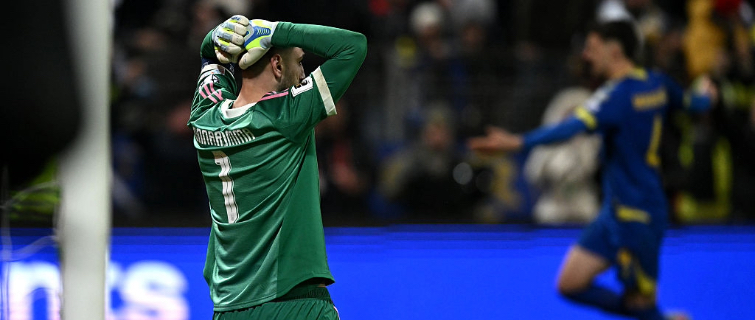
When Italy lost 4-1, on penalties after a 1-1 draw with Bosnia and Herzegovina in the decisive UEFA playoff match, it was the first time in global football history that a former champion failed to qualify for three consecutive World Cup tournaments. While four Group B teams prepare to kick off World Cup play in Vancouver, Los Angeles, and Seattle, the four-time Italian champions will be missing. In football terms, this is the ultimate "howler,” a shocking misstep that has now been repeated twice.
The anticipation of hope has once again been disoriented by a continuation of despair for those associated with the Italian Football Federation and its national team supporters. After missing the World Cup in 2018 and 2022, expectations were high that Italy’s national sports team, or affectionately known as the Azzurri, would return to its familiar, preeminent position in this year’s tournament. Instead, Italy’s football program is in disarray with the resignations of its federation president, delegation chief, and national team coach resulting from this most recent World Cup failure.
Football observers and analysts are describing Italy’s current predicament as a crisis in its otherwise celebrated football history, with blame assigned to a lengthy list of deficiencies and disappointments. These issues range from a decline in the level of play in Italy’s Serie A league, which was once considered among the best in the world, to falling behind in providing world-class stadiums, to a noticeable drop in fan engagement, attendance, and support for the Azzurri. The struggles extend to criticisms of the development of young players and the lack of commitment to invest in international stars that would reignite interest in Serie A teams. Italy is set to co-host the 2032 European Championship with Turkey, but there are doubts about the country’s interest and capability to serve in the role.
Finding a Path Forward
Instead of following its national team competing in the most passionate and visible event in global sports, Italy will be spending the coming months attempting to rebuild its fallen football foundation by installing new leaders and reclaiming its lost prestige.
An introspective situational analysis will need to be conducted, and a new strategy will be required to direct the future of Italy’s men’s national football team. Hope is not a strategy. But restoring hope can be a goal.
If you’re interested in exploring how sports industry leaders develop business strategies and position their organizations for success, Georgetown’s Executive Master’s in Global Sports Strategy & Operations offers an immersive experience that examines real-world case studies and practical applications. This yearlong program moves beyond theory, using an immersive curriculum and a unique collaboration with Manchester City FC to equip you for immediate impact. From analyzing market shifts to networking with industry experts, you’ll gain the strategic toolkit needed to lead the next generation of global sports.
Learn more


Bobby Goldwater
Bobby Goldwater, a veteran sports executive, serves as faculty director of the new Executive Master’s in Global Sports Operations & Strategy program, an innovative collaboration between the Georgetown University School of Continuing Studies and Manchester City Football Club, launching in fall 2026. He has spent 18 years as a faculty member in the Master’s in Sports Industry Management program and has extensive experience across the sports, entertainment, and venue management industry.